AIDS at 30, some personal thoughts
Today is being remembered as the 30th anniversary of the start of the AIDS epidemic. June 5, 1981 was the day the Los Angeles Times reported on the mysterious deaths of gay men by the Center for Disease Control. I seemed to have missed seeing that article though I was a regular reader of the LA Times then. Being in a house of news junkies, 5 daily papers usually ended up at our house every day. It was actually an article in the New York Times that caught my attention. I do not remember the date, but I know it was not long after I moved into my West Berkeley house on June 24 of that year. I was regularly riding my bike to a job I had in Point Richmond and stopped every morning at a newspaper rack on San Pablo Avenue in Albany (that’s Albany, CA) to pick up the national edition of the New York Times. Then I would browse it a bit when I got to work and read it more thoroughly during the morning break.
I was in the closet then and was debating coming out. We had just moved to the Bay Area, and I saw attitudes toward gay people beginning to change. I had a wife and young daughter and did not want to hurt or abandon them. Then I saw the article about a mysterious gay cancer and wondered if living openly as a gay man was such a good idea. As the weeks and months past, I read more stories and became more frightened. I was frightened enough to stay in the closet for the next decade. Keep in mind that how the disease was spread among gay men remained a mystery for several years. No one knew how easy it was to transmit. Staying closeted for me meant staying alive.
The first AIDS death of someone I knew was a neighbor who had worked as a nurse. I am sad to say I did not know him well. Years later, a former housemate died of AIDS. She had serious substance abuse problems, including severe alcoholism. When I started attending New College in 1991, one of my classmates was in the last stages of the disease. I was able to get know him in the last few months of his life. He was one of the founders of the Radical Faeries. When he died, there was a lovely memorial at his flat in the Haight where his ashes were passed around for everyone to hold.
The year before I returned to college was the year I finally had the courage to come out as a gay man. Though I regret my decision to not come out earlier, I have had no regrets since then. In this month of Pride, 2011, it is good to reflect on how far we have come. AIDS still exists, but it is no longer the death sentence it was 30 years ago. It is 100% preventable and eventually will be curable. Of equal importance is the change in social attitudes toward gay people. Both public figures and everyday people are coming out with increasing frequency. Being gay is no longer controversial. Same sex marriage is slowly becoming legal, state by state. What a joy to see this happen in my lifetime.
A Rainy Day in Berkeley
Rain in June is a rare event in the Bay Area. This has been a good opportunity to sit down and catch up with writing projects I had previously promised to myself and others. One is a statement I plan to read at the memorial for my deceased housemate Bob Berry this coming Friday. I will print that here later. I am reminded of some rainy days past.
In January of 1980, Melissa, my wife at the time, and I were in the process of making the final decision to relocate to the Bay Area. We decided to take a week’s vacation to stay with Bob in his South Berkeley basement flat. I had just finished my first full-time political job.
The previous summer, I quit a job at a contact lens factory and went to work for Bill Press. Press had left his job for Governor Jerry Brown and was wanted to qualify a ballot initiative to create a tax on the profits of oil companies. I was drawn to the initiative campaign because the money was intended to fund public transportation and alternative fuels. I was sick of seeing support for buses dwindle in San Diego, especially after the passage of Proposition 13. I wanted to live without a car, which was I found to be a heavy financial burden with my minimum wage factory job. I was happy that I was a able to ride a bike to work every day because no bus could get me there that early in the morning.
Ironically, the job of gathering voter signatures all across Southern California forced me to drive hundreds of miles each week. The job took longer than expected, as well. We stood out in front of shopping centers over Thanksgiving and then the busy Christmas shopping season. We finally finished after New Year’s, and I was exhausted. I needed a vacation and a chance to get away from the Southland.
Bob said we could sleep on his floor for a week. He knew we were seriously considering a permanent move. When we got there, I planned to just park my truck to walk and ride the bus the rest of the week. However, there was one damper to our vacation I did not take into consideration. January is the start of the rainy season, and the Bay Area gets a lot more rain than San Diego. It was raining when we got there, so we decided to wait to go out until the weather cleared up. We sat around, listened to KSAN, and read Bob’s books while he was at work. After a few days, we realized the weather was not going to clear up. We were starting to get cabin fever.
Our daughter was four years old, so we decided to take her to the San Francisco Zoo. We stopped in Chinatown and bought umbrellas that were colorfully painted and made of bamboo. We took the streetcar to the zoo where we walked all day in the pouring rain. I remember having a good time, although I learned something about the lacquer on those umbrellas we bought in Chinatown. When they get wet, the umbrellas have a strange and unpleasant chemical odor. They don’t last very long either.
It rained the entire week, but I had already decided before we left that we would be returning to Berkeley to stay. We loaded up all our possessions in our Datsun pickup and completed the move in one day. That was February 29, Leap Day, 1980.
Bob Berry
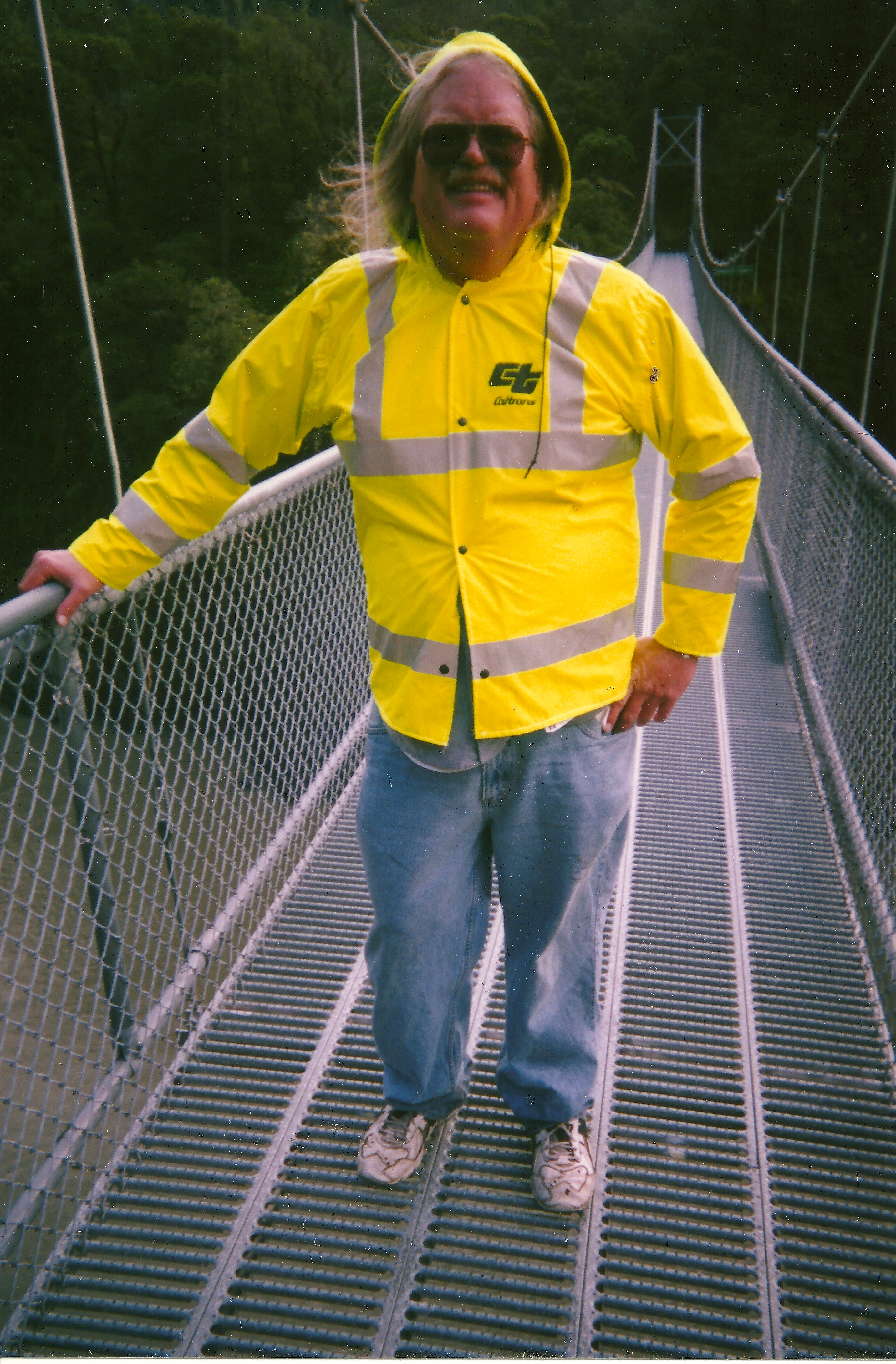 On Thursday, May 19, I lost my good friend and housemate, Bob Berry. We lived in the same house together for almost 30 years. He was a Grateful Dead fan to the very end, and what a long, strange trip it has been.
There is a lot I could write about Bob, and I probably will. For now, I will just relay the last hours of Bob’s life, starting on the evening of Wednesday, May 18. I had just arrived home from work and discovered that Bob sitting in the living room. He had thrown up on the coffee table and said he was feeling fine until he suddenly felt the urge to vomit. He didn’t have the strength to stand up to get to the bathroom. I cleaned up the liquid which looked like spilled water, and Bob went to his room to rest. We suggested taking him to a doctor if he got worse. That night, Bob came down to the kitchen while I was cleaning up. He got himself something to eat, so I assumed he was feeling better.
The next morning after I went to work, Bob reported he was still not feeling well, but turned down offers to take him to a doctor. His daughter heard him running the water in the bathtub. Not long after, she went into Bob’s bedroom and found him sprawled out on his bed and unresponsive. He had thrown up again. This time he had thrown up blood. Another housemate called 911 and then called me. When I arrived home, the police were there, examining Bob’s body. The coroner ruled the cause of death to be natural causes.
The family has ordered a thorough autopsy, and the results won’t be known for awhile. After the results are known, Bob’s body will be cremated, and at least some of the ashes will go to a family grave in San Diego.
Right now, I am focusing much of my attention on contacting as many of Bob’s friends as possible. Unfortunately, there are too many that I do not have phone numbers. There are people he knew at UC Berkeley, both during the Free Speech Movement and People’s Park demonstrations. There are those he worked with at the Berkeley Barb. Through the years, Bob has interacted with many transportation activists, especially bicyclists. He was a regular rider in San Francisco’s Critical Mass. There are people who have been attracted to Bob’s offbeat political activism, including a revival of the Whig Party that Bob called his 1976 bicentennial project. There were the admirers of his vast collection of books that we now have to find good homes for.
A memorial for Bob Berry will be on Friday, June 10, 2:00 PM at Berkeley Friends Church, 1600 Sacramento Street, at the corner of Cedar Street. It is walking distance from North Berkeley BART and University Avenue AC Transit bus lines.
Bob’s manager at Caltrans kindly wrote the following:
It is with great sadness and regret that I report that Robert (Bob) Berry passed away on May 19, 2011.
Bob was born in San Diego, CA on March 18, 1949 to Charles W. and Sara W. Berry.
In the mid to late 1970s, Bob worked as a DC-3/C-47 cargo handler for Zoom Zoom Air. Bob enjoyed sharing his fond memories of working for Zoom Zoom Air.
Bob started his Caltrans career in July 1983 as a Junior Engineering Technician in the Project Development branch. In 1984, on Halloween Day, he transferred to the traffic branch. Shorty after, in early 1986, Bob was promoted to Transportation Engineering Technician and transferred from Traffic Signing section to the claims section. A year later, in August 1987, Bob was promoted to Assistant Transportation Engineer. In May 1991 Bob transferred from Claims to the Traffic Signing section, and in March 1993, Bob began working as a Legal Liaison Engineer.
One of Bob’s finest talents was his ability to identify and find key documentation that repeatedly helped the state prevail in “deep pockets” lawsuits. Throughout his career in the traffic office, Bob diligently provided timely, insightful, and reliable assistance to state attorneys in defending the state in lawsuits. With his dedication, knowledge, and enthusiasm, Bob saved the state millions of dollars in settlements.
Bob was a free spirit, an avid bicyclist who did not own a car, and had a love of DC-3 and C-47 aircrafts. His life style was the 1960’s (“hippie”)
Bob was touched by many, either through a joke, a kindness, or some other positive manner. His family would appreciate if you would email your memories of Bob to his daughter Avila and his brother Bill. The family would like to preserve your written words as a living tribute to Bob.
Bob is survived by his brother William Berry and his daughter Avila Birch.
The memorial service will be on Friday, June 10, 2011, 2 pm at the Berkeley Friends Church (1600 Sacramento St, Berkeley, CA 94702), corner of Cedar St. The church is also within two blocks of the North Berkeley BART station. The family hopes that people attending the memorial service would arrive in tie-dyed t-shirts to honor Bob’s free spirit.
Our deepest condolences and sympathy to his family.

What’s Missing
I just finished reading the Obama administration’s report titled “Blueprint for a Secure Energy Future.” Sadly, there is one word missing from an otherwise well thought out plan. That word is “bicycles.”
Now to be fair, the report does include the need for better urban planning to get people out of their cars, and past energy statements from the administration have included walking and bicycling as ways to conserve fossil fuels. Even First Lady Michelle Obama’s task force on childhood obesity included cycling and walking in their report, especially with the Safe Routes to Schools program.
Still, it would have been nice to have included bicycle planning in the 44-page report that has a lot to say about creating electric and biofuel vehicles, as well as increasing mileage on gasoline engines. The administration has shown support for bikes. Transportation Secretary Ray LaHood has spoken to bike advocacy groups and written of his support on his blog. Energy Secretary Steven Chu is also a regular bike rider. Maybe, the administration was assuming it has done enough to promote cycling. Or maybe the White House is worried the Blueprint would not be taken seriously if it specifically mentioned bicycles. Congressional Republicans have ridiculed past attempts to include bicycles in transit projects. To add bikes to the Blueprint may appear looney to some, but that is exactly why they need to be included. Bicyclists are a growing political constituency that is anything but looney. We are changing how our country lives and travels.
This cycling grassroots movement is well documented in Jeff Mapes Pedaling Revolution that details the rise of cycling in his hometown of Portland, Oregon. There are a number of specific bike-friendly ideas that could be added to the Blueprint.
Bicycle Boulevards
People will ride more if they feel safe. A bicycle boulevard is not a street free of cars. It is a street with fewer cars traveling at slower speeds. Barriers are created so that bicycles have preference for the entire route. That may mean right-turn only intersections for cars or bridges where only bikes and pedestrians may cross. That way car traffic is limited to those living in the neighborhood, and those who want to get across town as quickly as possible must take other routes.
Secure Bike Parking
People will ride more if they know their bikes are safe and secure when they are parked. This could include bike parking stations at places of employment or transit stations. Individual bike lockers could be rented by the hour. Conveniently located bike racks on the street would encourage bike use for quick shopping trips in commercial districts.
Safe Routes to School
The administration could just copy and paste that section from the First Lady’s report on childhood obesity. Getting more children walking and biking to school creates a win-win situation. Children are more likely to get injured when their parents drive them in their cars. Walking or biking becomes safer when there are fewer cars trying to drop off children at school. Children are at great risk for diabetes and obesity from lack of exercise. Gas is conserved, and carbon emissions are reduced. Make that a win-win-win-win-win.
Safe Routes to Transit
Rapid transit increases the range of a person on bike. This includes the person who wants to leave a bike parked at the transit station or one who takes a bike on train or bus. Bike racks on buses and areas set aside for bikes on train cars allow people to continue their travel on bike after getting off transit. This would increase ridership on high-speed rail. It is a lot easier to take a bike on a train than on a plane.
As the Blueprint notes in several sections, there is no “one size fits all solution.” Bicycling alone will not end our dependence on foreign oil, but neither will electric cars or wind turbines.
Back to the Future
Nor are bicycles a step backwards. Technological advances in materials have made bicycles lighter and stronger. They have always been the most energy efficient form of transportation, and they are even more efficient now. The bicycles of the future onboard the trains of the future can help us “Win the Future.”
Worst Case Scenario
Over the weekend after the Japanese earthquake and tsunami struck, I found myself in a profound sense of grief. First, of course, I grieved for the victims, those who lost their lives and those who had been left to survive and deal with the aftermath. This grief has been compounded by the stories coming out of the crippled nuclear reactors at Fukushima Daiichi. Yes, I understood this was a very unusual event, the fifth most powerful earthquake recorded since 1900. The reactors did withstand the force of the quake itself, but succumbed to the powerful tsunami that shut down generators needed to power the backup cooling system. I understood that the odds of a similar accident happening in this country was not even worth worrying about. And yet I found myself stunned and silent, unable to talk to anyone what I was thinking or feeling. I knew how others were reacting. Those who have held firmly to their anti-nuclear views now felt vindicated that their fears had come to pass. Those who were beginning to reconsider their opposition are now backing away from accepting of nuclear energy. For those of us who still support nuclear power, the work that was difficult before the accident has become even harder after it.
In Quaker worship, I pondered my feelings until I found a message that I shared vocally. “An earthquake can shake our beliefs. A tsunami can wash away our dreams. After that, we mourn, we learn, we rebuild.” I later tweeted the message, one my few tweets that have been retweeted.
Even as the disaster continues to play out, with each day bringing some good news alternating with more bad news, there are those who are able to put it all in perspective. One is Gwyneth Cravens in Bloomberg News, reminding us that the problem at Fukushima is just one of the catastrophic disasters that Japan is currently facing. Our news media has focused our attention on radiation and away from other health crises that the earthquake and tsunami have caused. Cravens previously published the book Power to Save the World about her own journey from antinuclear activist to nuclear power proponent. I can relate to that story, having made a similar journey: http://tfyamaguchi.tripod.com/nuclear_power.html
In reality, fossil fuel energy has proven itself far more dangerous. Let us not forget that the damage includes to our climate. Climate change continues to be a ticking time bomb. We could take our time to develop safer energy sources, particularly nuclear fusion. Unfortunately, climate change does not give us much time. Nuclear fusion won’t be feasible until later this century, if ever. Those who believe we can get all the energy we need from wind and solar are not realistically dealing with the scope of the problem. We could say those who advocate for renewables alone are as much in denial as those who believe humans have nothing to do with the rapid increase in global temperatures.
This means we will be saddled with nuclear fission for awhile, but, the goods news is that nuclear technology continues to evolve. Older reactors, such as Fukushima Daiichi that date back to the sixties, are being replaced with better designs, more resistant to natural disaster.
And so I grieve, and I learn how to respond to my grief. One response that is never productive is panic, especially the panic over traces of radiation that may be drifting over California. In looking for an appropriate model of response, I thought of columnist Dan Savage and his creation of the It Gets Better project. Savage was responding to a sudden rash of gay teen suicides. Young gays were killing themselves as the result of vicious bullying. Savage’s response was simply and positive. Let our young people know that many of us have been in their shoes. Those of us who did survive have learned that ours lives ended up OK after all, and we are glad we did not accept suicide as an option. People shared their stories on YouTube of how it got better for them, and a nation has been moved to action against bullying.
The best response includes listening, reading, and learning. A friend of mine Karen Street has been studying climate change and nuclear power for the past two decades. She publishes a blog, A Musing Environment. There is also World Nuclear News and the Energy Collective. Those pages can lead you to even more resources.
An earthquake can shake our beliefs.
A tsunami can wash away our dreams.
After that, we mourn, we learn, we rebuild.
Then we can say, “It gets better.”
How I spent my day at Macworld
When I left to attend Macworld on Saturday, I had a fair amount of cash in my wallet. When I returned that evening, I had not spent of a penny of it.
Yes, my ticket to the expo was free. I took advantage of an offer that came by e-mail last summer. After filling out the registration online, I printed out the barcode on a piece of paper, and, being the cheapskate that I am, used the blank side of a previously printed page. This process is familiar to me, having used it to buy train tickets on Amtrak’s website. Scanning the printed barcode at my station’s kiosk, I received my paper ticket on the spot to board the train.
For this trip, I rode my bicycle to the North Berkeley BART station and found parking in one of the vacant bike lockers. I inserted my prepaid card into the slot of the locker. The amount on the card had been loaded online by transferring funds from my credit union account. Locker rental cost three cents per hour. I selected more hours than I needed, knowing the unused time would be refunded to me when I returned. Then I pulled my card out of the slot, and the locker door swung open, allowing me to place my bike and other personal possessions inside. After closing the door securely, I headed off for my excursion to the city.
When I entered the BART station, I waved my Clipper Card over the circle at the entry gate, which opened with in an OK message, allowing me to pass. The Clipper Card also is loaded with funds transferred from my checking account. After passing the card at the exit gate in downtown San Francisco, I walked south a few blocks to Moscone Center.
Strolling along the various booths, I picked up information about products I am considering buying in the future, probably online. After all, I am a cheapskate. Then I found one reasonably priced gadget that I decided to buy on the spot; a small microphone that fits on my iPod Touch for recording voice notes. This is something I have wanted for my iPod ever since I bought it.
My preferred credit card is my Visa provided by my credit union, since it is easy to transfer money online from my checking account to pay off the Visa. However, Bank of America has been noticing that I have not been using the MasterCard they gave me, so they keep making sweeter offers to encourage me to drag their card out of my wallet. The latest is a $50 certificate if I make $250 in purchases before March 31. I offered the MasterCard for the microphone purchase, which was cheerfully accepted.
When not strolling the aisles of vendors, I sat at the main stage, listening to the various presentations on Apple products. Then it was time to head home on BART, again paying with Clipper. Back at North Berkeley BART, I reinserted my BikeLink card into the locker’s slot. The door swung open, and I retrieved my vehicle for the ride home.
I did not give these cash-free transactions much thought until I heard a report from Haiti on NPR. “Mobile Money” is helping Haitians buy groceries with their cell phones. This is one of the few pieces of good news to come out of Haiti since the devastating earthquake hit over a year ago. Read how the phone company Voila is working with Mercy Corps to provide food assistance to the Haitians of Saint Marc.
“Paper or plastic?” When it comes to bagging my purchases, I always answer “neither,” since I remember to bring my own. When it comes to paying for those items, plastic seems fine. At least, this plastic is reusable.
A Better Way to Hold a Primary?
Post Election Thoughts – Part 2
Are political parties obsolete? Are there better ways to do democracy? Last June, California voters passed Proposition 14. It is the latest attempt to reform the primary process, and, if it succeeds court challenges, it will radically change how we conduct state elections.
In California, it all started with the creation of the direct primary one hundred years ago. It was one of the inventions of the Progressive movement that also gave us initiative, referendum, and recall. Before the direct primary, candidates were selected by machine party politics. The major parties, controlled by special interests, determined what candidates would be facing each other in November. The Progressives wanted to give more power directly to the voters, including choosing the nominees of each party for the various partisan offices.
The system has been a vast improvement over the “smoke-filled rooms,” though still not perfect. Until the last few decades, California has conducted closed primaries. Voters had to register with one of the state qualified parties in order to vote for that party’s candidates in June. This arrangement locks out the independent voter from having candidates to vote on in the spring. It also prevents crossing over and voting for candidates of either party in the various contests. The parties fear a completely open primary would allow crossovers to sabotage an election by nominating a weaker candidate who could be the easiest to beat in November. Today, we have a semi-open primary. Independent voters can ask for either a Democratic or Republican ballot when they enter the polls. This is only for state and local candidates, however. Presidential primaries are still closed. A voter who wishes to select a Republican candidate for President must register Republican before the election.
Turnout in primaries has been historically low, especially in non-presidential elections. In June, when voters were deciding on Proposition 14, as well as gubernatorial and senatorial candidates, one third of registered voters actually cast ballots. This means only a small number of Californians decided what candidates would compete in November. So if you were unhappy with your choices of either Meg Whitman or Jerry Brown, or Barbara Boxer or Carly Fiorina, you were not alone. This November’s turnout was only 44%. In November, 2008 it was almost 80%.
There has been some other tinkering with the primary process that has not helped turnout. Starting in 1996, Presidential primaries have been moved up in the calendar. The complaint was that, by the time California got around to having its election in June, the contest was over, and we knew who the nominees would be. The 2008 presidential primary was moved up to February. No one could have predicted that the Democrats would still have a competitive race between Clinton and Obama in June. If so, we could have saved a lot of money by having just one primary instead of two. And the turnout at the regular June primary was just 28%.
A major complaint of our current primary system is that the voters in those elections are not representative of those who show up in the fall. They represent each party’s base; the Republicans being conservative and the Democrats being liberal. While there are more registered Democrats in California than Republicans, the biggest majority are independent voters who are politically moderate. These are the voters who are the most disappointed with the choices they get in November.
Under Proposition 14, independent voters will get a larger voice. All candidates from all parties are listed on the same ballot. The top two candidates then face each other in a November runoff. This means the possibility of having two Democrats or two Republicans in that runoff. It could also mean two candidates who are not in either party making it to the general election. Independent candidates could become more viable.
One drawback is that the smaller parties will be frozen out of the November election. There are a number of small parties that have qualified for the California ballot: American Independent, Green, Libertarian, and Peace and Freedom parties. Each currently selects candidates for the general election. Under Proposition 14, candidates representing these parties will not be on the November ballot unless they can place first or second in the primary. There can be only two candidates in the general election, and no write-ins are allowed. On the other hand, candidates of these smaller parties never had a chance to win anyway. Voting for them is just a way of protesting the lack of choices we have received from the Republicans and Democrats. In the final analysis, do we want to protest our lack of choice or do we want to be able to vote for candidates that truly represent our views and interests? That is the real choice with Proposition 14.
Now add Rank Choice Voting to the mix. Instead of two elections, we just have one. Instead of voting for the “Lesser of Two Evils” (LO2E), we can vote with both our hearts and our heads. Our hearts may be drawn to a candidate with a slim chance of winning, while our heads lead us to the candidate that has the best chance and would do the least damage. Our heart candidate would be our first rank, and our head candidate would be a second. And who knows, maybe that heart candidate could be the next Jean Quan.
Give Rank Choice a Chance
Post Election Thoughts – Part 1
Local pundits are asking if voters are experiencing a bit of “buyer’s remorse” over their adoption of Rank Choice Voting. Case in point: the Oakland Mayor race in which Jean Quan defeated Don Perata after initial reports claimed Perata the top vote getter with over 33% of ballots cast. Was the election stolen from the winning candidate? Were the voters confused by a complex electoral system? Or are the voters a lot smarter than the pundits give them credit for and knew exactly what they were doing on Election Day?
Part of the problem rests with the Registrar of Voters office. Not to criticize Dave McDonald’s efforts to educate voters of Berkeley, Oakland, and San Leandro on how to cast a Rank Choice ballot; his office spent a number of evenings showing his PowerPoint presentation to community groups, explaining how their ballots would be tabulated. In so doing, McDonald had to leave questions of electoral strategies unanswered. How should voters mark their ballots to guarantee their favored candidate’s success and rival’s failure? The Registrar is only concerned with conducting fair elections, not the political strategies of the various campaigns. The candidates themselves would have to figure out how to campaign in this new electoral environment.
Where the Registrar’s office fell short was describing what to expect after the polls closed on Election Night. What people expect are election results, and they expect those results before they go to bed. Now voters are being told the real counting doesn’t start until the following Friday. Naturally, this appears to make the system less efficient than how elections were previously conducted. In reality, the new system is more efficient, and the results are obtained faster. The explanation is contained within Rank Choice’s other name, Instant Runoff Voting (IRV). However, while it is a runoff, IRV is not really instant. We have to wait until all the votes are counted, including provisional and mail-in ballots. In the case of the Oakland Mayor’s race, Perata and Quan would have faced each other in a new election, since Perata failed to receive over 50% of the vote. Such runoff elections can happen a number of weeks or even months after the initial election. Now, the process can be completed in less than one week.
We will never know how the results may have been changed through a traditional runoff. An argument could be made that Perata would have defeated Quan, having more money to spend on a second campaign. It could also be argued that anti-Perata voters who had cast their ballots for Rebecca Kaplan and other runners-up would shift their support to Quan in the runoff. The second assumes all those same voters will show up for a runoff where turnout is usually less than the general election. What IRV does is give voters the opportunity to exercise the second option without having to return to the polls to vote again. By ranking Quan as their second or third choice, Oaklanders could more easily vote for their first choice without fear that they were throwing away their votes to insure a Perata victory.
We frequently complain of our elections as being a choice between the lesser of two evils. Personally, I have trouble with calling people I don’t know evil, especially those who want to serve our democracy through elective office. Our candidates are generally good people of diverse opinions on what is the best direction to take our country. As people, our candidates are as complex as the problems our society faces today. When I walk up to the voting booth I understand that there is not a single name on the ballot that that mirrors my opinions exactly. The only way I can vote for someone who thinks exactly the way I do is to vote for myself, and I am not running, at least not in this election. Given the names that appear on my IRV Ballot, I have some options. I can say that Candidate A most closely represents me in political philosophy, but, alas, Candidate A does not have much chance of getting elected. Candidate B is not as good as Candidate A, but is a much better choice than Candidate C. So, when I mark my ballot, A is my first choice and B is my second. If there are only three candidates in the race and a I decide I could not accept C under any conditions, I may decide to vote for only A and B.
Jean Quan and Rebecca Kaplan understood this aspect of IRV, and Don Perata did not. While Perata’s strongest supporters ranked his name first, there was no effort to reach other voters to consider Perata for second of third rank. Meanwhile, Quan asked voters to rank her second if they they preferred someone else for their first choice. Kaplan also told her supporters to rank Quan second. Together, they were able to block Perata from picking up more votes as each round was conducted. In the end, the majority of Oakland voters did not want Perata to be their mayor and were able to show it without having to conduct a second election. Meanwhile, those who were not excited about any of the top candidates could have their say without throwing their vote away in a LO2E election.
However we decide to conduct our elections, one constant will not change. Only one candidate can win. That means most candidates will lose, and chances are one of those losers will be one I voted for. There is no system that can give us everything or everyone we want. This is what democracy is all about. IRV alone cannot solve all the problems in our current system, especially the influence of money in campaigns. It can help candidates with grassroots support, but who lack deep pockets. Again, the Oakland Mayor’s race is a good example.
Perata had the deep pockets, as well as the support of the political establishment in Oakland, including the unions and Democratic Party. He was their choice to follow in the footsteps of previous establishment candidates with name recognition: Jerry Brown and Ron Dellums. His challengers did not have that name recognition or huge campaign war chests. In a traditional election, voters would be reluctant to throw away their votes on such risky candidates and would be induced to jump on the band wagon of the establishment choice. Going into a traditional runoff as the first place finisher would give Perata an added boost, in addition to his money advantage over Quan.
IRV could be the most important advance in electoral reform since the Progressives gave us initiative, recall, and referendum. We should give it a chance to work. Otherwise, we’ll be back to the same old LO2E.
You Say You Want A Revolution
Once a month, I get a newsletter in the mail, printed double-sided on purple, 8.5″ by 11″ copy paper. I signed up for the newsletter of Lavender Seniors of the East Bay at a Car Free Day in Oakland a number of years ago. I confess I have never participated in any of Lavender Seniors’ events. I mean to some day so I stay on their mailing list. Their publication Lavender Notes includes the header “A Project of the Tides Center.” The Center itself is a part of a larger organization that is based in San Francisco’s historic Presidio. It is known as the Tides Foundation. If you are aware of the Tides Foundation now, you probably were unaware of it until the past few months. If you are unaware of it now, you probably will be soon. In either case you can thank Glenn Beck.
I already knew about the Tides Foundation before I started receiving Lavender Notes in the mail. One of my first explorations on the Internet came through a Usenet group called PeaceNet, another project of the Tides Foundation. My previous online experience started with Quantum Link on my old Commodore Computer, which was the predecessor to America On Line. I also signed up with the Well, a group started by the folks who gave us the Whole Earth Catalog and Whole Earth Review. I signed up for the Well with the user name BikerTom to show my interest in bicycles. It turned out that my other Well Beings assumed I was a motorcycle rider; not the message I intended to send. When I signed up for PeaceNet, accessing its text-based service with my 1200 baud, dial up modem, I chose a more conventional user name, my last name preceded by my first initial. Sending e-mail with the account tyamaguchi@igc.apc.org matched my nonprofit style. I liked being a dot org instead of a dot com. The IGC stands for the Institute for Global Communications. The APC is for Association for Progressive Communications. Being on PeaceNet made me feel like the early pioneers of radio and TV, reaching out to find like-minded souls in a community undefined and unrestricted by geography. I did not consider anything about PeaceNet, or IGC, or Tides to be subversive or evil. Nor would I have thought that anyone else in the world would think so. I guess I was wrong. Enter Glenn Beck.
Writing about people like Glenn Beck is difficult for me. It is obvious his main motivation is to get publicity for himself. The more the media writes about him, even if what they write is negative, the more they help him succeed in his goal. Those of us who do not listen to his rants on radio and TV are never successful in avoiding him for long. He has been the target of Jon Stewart’s humor on a number of occasions. Beck does make an easy target. His villains include the Progressives, by which he means the Progressive Party of Teddy Roosevelt and Hiram Johnson in the later 19th and early 20th centuries. These are the folks who gave us direct election of US Senators, along with direct voter participation through initiative, referendum, and recall. People may complain how those institutions have been abused, but you can’t argue that the motivations of the Progressives was anything but democratic. To call them fascists defies logic, and defying logic is something Glenn Beck does quite well in his broadcasts. Yes, he is difficult to ignore, especially when a few take him seriously enough to take their marching orders from him.
When Byron Williams opened fired on CHP officers who tried to stop him on an Oakland freeway last July, many of us woke up to a news story that defied our imaginations. We watched the video footage Oakland resident Manny Black shot from his apartment window next to the freeway, now posted on YouTube. “Get down blood,” he shouts to his roommate to the sound of gun shots and squealing tires coming from outside. It has the look of a fictional movie shot with jerky camera movements to appear real. Yet, this was all too real. Byron Williams had driven from his home in Groveland, armed to the teeth with the intent of killing people at the ACLU and Tides Foundation in San Francisco. His erratic driving on I-580 prevented him from carrying out his mission. After wounding several police, he was finally brought down. He was heavily protected in body armor when he was stopped. He later told police he wanted to start a revolution.
In recorded interviews Williams credits Glenn Beck as his his source of information and the motivation that led him on that early morning drive to San Francisco. Naturally, the question is how much responsibility does Glenn Beck bear in this crime? Beck did not tell Williams or anyone else to go kill employees of the ACLU and Tides Foundation, but his words of fear and conspiracy did have an influence on the mentally unstable Byron Williams. How much responsibility does a broadcaster have?
A few states away, Nidal Hasan has been sitting in a courtroom, paralyzed from the chest down, accused of opening fire on his fellow soldiers at Fort Hood, Texas. Some call the shooting a terrorist attack. E-mail correspondence with the radical Islamic leader Anwar al-Awlaki has been offered as proof of Hasan’s link with Al-Qaeda, but the military insists that Hasan acted alone. Like Byron Williams, Nidal Hasan suffers from mental illness, which is especially ironic since Hasan was working as a psychiatrist. If he did act alone, he was no doubt motivated by the anti-American rhetoric he heard from people like al-Awlaki. How much responsibility does a religious leader have?
Who are the terrorists in these stories? Byron Williams? Nidal Hasan? Both? And who is responsible for their acts of violence? Al-Qaeda? Anwar al-Awlaki? Glenn Beck? Fox News? Or is each man alone responsible for what each has done, even if these acts were committed by insane minds?
You say you want a revolution
Well, you know
We all want to change the world
You tell me that it’s evolution
Well, you know
We all want to change the world
But when you talk about destruction
Don’t you know that you can count me out
Don’t you know it’s gonna be all right
all right, all right
(Revolution by the Beatles)
More on the subject:
http://www.csmonitor.com/USA/Society/2010/1016/Did-Glenn-Beck-s-rhetoric-inspire-violence
http://blog.tides.org/2010/10/13/why-is-tides-a-target-of-the-right/
http://www.sfgate.com/cgi-bin/article.cgi?f=/c/a/2010/07/24/INPG1EIKHU.DTL
One last word about Glenn Beck and his followers:
Like many, I was angered by Beck’s exploitation of the 1963 March on Washington for Jobs and Freedom. When Dr. King spoke at the Lincoln Memorial, the message was social justice, the message that Glenn Beck tells his followers to run from if they hear it in church. I took relief that Beck’s rally was much smaller than the 250,000 that turned up on August 28, 1963. I tweeted that CBS News estimated Beck’s crowd to be about 87,000. One of Beck’s followers saw my tweet and decided to add me to one of his special Twitter lists, “soul-less-assholes.” The list’s description reads, “Hate filled people who have nothing better to do they have empty lives so they attack others.” So every tweet I write goes directly to the “soul-less-assholes” list. What a great place to send messages of love, compassion, empathy, and tolerance! And what a message that sends about the person who would label those tweets as hate speech! Let that be my small response to Glenn Beck. Now excuse me while I get back to my empty life.
Blog Action Day-Water
The theme of this year’s Blog Action Day is water. Bloggers will be contributing many different insights on the serious issue of access to water. For California, the issue of water is strongly connected to the topic of last year’s Blog Action Day, Climate Change. Water has driven the state’s politics for many decades. The North and South have fought over access to it, most notably through the proposal to build a peripheral canal through the San Joaquin Delta. Now climate change introduces more uncertainty in the future of fresh water for the state. That supply has always been tight as we have faced years of drought, along with increased population.
We are already seeing the evidence of climate change in California as the result of global warming. Winters are getting milder. Summers are experiencing more severe heat waves, especially in Southern California. Los Angeles recently hit 116 degrees for the first time in its history of recorded temperatures.
What does that mean for our supply of fresh water? Much of that water starts in the Sierra Nevada mountains. It accumulates in those mountains as snow in the winter. Then in spring and summer, that snow melts down to provide our cities and farms with the water they need when it is needed most. So what do warmer winters do to that water supply? They mean an early snow melt and runoff that would leave the state dry during the late summer and fall when there is little or no rainfall to fill our buckets. That means we will need to catch and hold that runoff in more reservoirs to keep it from flowing into the ocean. Or we will have to live with less. We will probably have to do both. We are already challenged to finance repairs for the deteriorating levy system in the San Joaquin Delta. Building more dams and reservoirs will not be cheap.
Climate change will have a big impact on California, especially on our supply of water. This will naturally have a big impact on our economy. Prolonged drought would be devastating to agriculture. Diverting water from rivers will decimate our fishing industry. Higher water bills will place a burden on consumers. Drier vegetation will fuel larger brush fires which will then pump more carbon into the atmosphere.
In 2006, California enacted the nation’s strongest climate change law. That law is now being challenged by Proposition 23. The proponents of Proposition 23 argue that we can’t afford the expense of protecting the climate and reducing our carbon emissions. They want to put the law on hold until the rate of unemployment drops below 5.5% for an entire year. Their argument that sets jobs and the economy against the environment is a false one. In reality, climate change is the real threat to jobs and the economy. Reducing our carbon emissions will not be cheap, but doing nothing will cost us even more. It could deprive us of one of our most valuable commodities, clean water. California voters should reject Proposition 23.
-
Archives
- May 2026 (2)
- March 2026 (1)
- July 2024 (1)
- May 2023 (1)
- May 2022 (1)
- September 2021 (1)
- March 2021 (1)
- October 2020 (2)
- September 2020 (1)
- May 2020 (1)
- April 2020 (1)
- March 2020 (2)
-
Categories
-
RSS
Entries RSS
Comments RSS

