Passing of historian Tony Judt
Last March, I blogged about Terry Gross’ interview with historian Tony Judt. The New York Times reported today that Judt died on Friday, 8/6/10, from Lou Gehrig’s Disease. I was inspired by his view of the afterlife and am quoting it again here.
“I don’t believe in an afterlife. I don’t believe in a single or multiple godhead. I respect people who do, but I don’t believe it myself. But there’s a big ‘but’ which enters in here. I am much more conscious than I ever was — for obvious reasons — on what it will mean to people left behind once I’m dead. It won’t mean anything for me. But it will mean a lot to them. It’s important to them — by which I mean my children or my wife or my very close friends — that some spirit of me is in a positive way present in their lives, in their heads, in their imaginations and so on. So [in] one curious way I’ve come to believe in the afterlife — as a place where I still have moral responsibilities, just as I do in this life — except that I can only exercise them before I get there. Once I get there, it will be too late. So, no God. No organized religion. But a developing sense that there’s something bigger than the world we live in, including after we die, and we have responsibilities in that world.”
More available at
http://www.npr.org/templates/story/story.php?storyId=125231223
My original blog post on Tony Judt
https://tomyamaguchi.wordpress.com/2010/03/31/how-an-atheist-views-the-afterlife
Breaking News-Shirley Sherrod News Story Balloon
 Breaking News! The cable news networks are still following the Shirley Sherrod News Story Balloon as it floats between Georgia, New York City, and Washington, DC. Where will it come down? Will there be deaths or injuries? Will we find out if Shirley Sherrod is actually inside?
And a note from this reporter. I can’t resist looking, but I am so easily distracted by shiny objects. I know there are more important things I need to know about. What about climate change? What happened to that comprehensive energy and climate protection bill? Hasn’t this country been experiencing a very hot summer? But then, didn’t we just have a very cold winter? It’s all so confusing. So abstract. It makes our heads hurt. Where were we?
Oh, it’s Mel Gibson cursing into the telephone, screaming racial epithets. Is Mel Gibson a racist?
We interrupt this distraction to report the Shirley Sherrod News Story Balloon is now drifting back toward Washington, DC. But there are storm clouds on the horizon. Will she take the job with the USDA? Will it turn out that when we thought she wasn’t really a racist that she may actually be a racist?
The cable news networks’ teams of conservative and liberal bloggers will be dissecting and analyzing every microsecond of the videotaped speech to determine any intended or unintended meaning, as well overt and subliminal messages. Is the NAACP racist? Is the Tea Party racist? Is Andrew Breibart racist? Is the USDA racist? National Enquiring minds want to know.
All cable news networks will continue to follow this story until it totally deflates into a wreck of shredded mylar and balsa wood. Stay tuned.

Boycott marriage? Some Quaker meetings are saying no more marriages until everyone can get married
Not all religious organizations are opposed to same-sex marriages. A number have actually joined the movement for marriage equality. Among them are Quakers in the unprogrammed, universalist tradition. They have been marrying gay and lesbian couples for decades, even though those marriages have not had legal standing. These meetings have active LGBT members and attenders.
If you are not familiar with marriages in unprogrammed Quaker meetings, it is important to recognize the difference from other marriage ceremonies. There is no minister on the pulpit declaring the couple “husband and wife.” Instead, everyone attending the meeting for marriage is recognized as a minister and signs the marriage certificate. The couples proudly display their marriage certificates on the walls of their homes. These certificates are unique works of art. Due to the unconventional view that Friends have of marriage, it has taken a long time for Quaker marriages to gain legal recognition.
Strawberry Creek Meeting, in which I am a member, recently received a packet of material in the mail from Claremont Meeting, near Los Angeles. The packet includes a minute approved by Claremont this year that states that meeting will no longer officiate any marriages until same sex unions are legal in California. Claremont is following the lead of Twin Cities Meeting in Minnesota, and the packet includes documents and a similar minute adopted by that meeting late last year. Our clerk gave me the papers to scan and post to our meeting’s website. Those documents can be viewed at
http://sites.google.com/a/strawberrycreekquakers.org/marriage-equality ,
as well as other documents that were e-mailed to me by the clerk of Claremont Meeting.
I continue to feel the love and support of this religious community that is committed to the equal treatment of all individuals, including those who are lesbian, gay, bisexual, and transgendered. Not all Quaker organizations are so supportive, most notably Quaker churches who consider homosexuality a sin. I appreciate the strong leadings of Friends who find the practice of marrying only heterosexual couples to be inconsistent with our testimonies of equality and integrity. I know a number of heterosexual couples who have married in their meetings while expressing disappointment that lesbian and gay Friends are being denied that opportunity. While I share that concern over inequality, I am not comfortable with the decision to deny marriage to any couple, especially Quaker couples who have been allies for LGBT rights. Instead of denying rights to anyone, I would feel more supportive of efforts to marry all couples in defiance of Proposition 8. What an impression it would make for an entire congregation of Quakers to accompany those couples to the county clerk’s office to demand a marriage license and refusing to leave until one is granted.
Not Quite Beyond Petroleum
When Republican Senate Candidate Rand Paul complained about how Barack Obama was treating BP, he called the President’s criticism of the company un-American. “I think it’s part of this sort of blame-game society in the sense that it’s always got to be somebody’s fault instead of the fact that maybe sometimes accidents happen.” While there is evidence that a crime may have been committed, and Attorney General Holder is conducting a criminal investigation, Paul does have one good point. Americans love to find someone to blame. The blame-game that Paul complains about is unfortunately very American. As soon as oil began washing on the shores of the Gulf Coast, folks on the Left and Right were seeking out someone to blame. For the Left, BP is a good target. They are a big, multinational, oil company. For the Right, Obama is a good recipient of blame. He is the head of the government that awarded the leases. The buck should stop at the Oval Office. So the Right blames the government and the politicians while the Left blames the corporations and the C.E.O.’s. If you can’t do something about the problem, finding blame at least has the appearance of doing something.
BP, originally named British Petroleum, has been trying to rebrand itself as Beyond Petroleum. They are not the only oil company to recognize that oil is a finite resource, and that it is in their best business interest to diversify into other fuels. Here, in Berkeley, corporation bashing is a tradition that goes back to the Free Speech Movement when Mario Savio denounced what he called a corporate-controlled university that was only interested in producing workers to function as cogs in the corporate machine. BP caused a stir when it announced the funding of a biofuels research project on that same university campus. For many Berkeley residents, BP’s money is as welcome as salmonella at the company picnic. Dr. Steven Chu, then director of Lawrence Berkeley Laboratory, gained the suspicion of the Berkeley Left for his courting of BP and their corporate money. That suspicion of Chu continues as he now heads the Department of Energy.
BP is also an oil company that is not in denial of global warming, another reason it is looking for alternatives to fossil fuels. It is willing to support cap-and-trade legislation, which has allowed Republicans to do a little corporate bashing of their own. During the recent debate over the Murkowski Amendment that would have taken the power to regulate greenhouse gas emissions from the EPA, Senate Minority Leader Mitch McConnell charged, “The problem for Democrats is that debating the Democrat cap-and-trade bill might not fit neatly into the White House messaging plan, since it’s been widely reported that a major part of the Kerry-Lieberman bill was essentially written by BP. This is clearly an inconvenient fact: an administration that seems to spend most of its time coming up with new ways to show how angry it is with BP is pushing a proposal that BP helped write.” The Politifact website found that statement to be false. BP gave input, like other companies and environmental groups, but it did not write the Kerry-Lieberman bill.
BP is not the only energy company that has come under fire recently for its political activity. PG&E suffered a big defeat in the California primary after spending $46 million to pass Proposition 16, a constitutional amendment that would have prevented local governments from getting into the electricity business without two thirds approval from voters. PG&E wrote the amendment to ward off competition. In response, State Senator Mark Leno has a bill to prevent the company from using ratepayer money for political campaigns. While, the money spent on Prop 16 was a bad decision by PG&E, the company has been on the right side of the issue of climate change by encouraging conservation and reducing its own carbon footprint. Two years, ago, PG&E gave $250,000 to defeat the anti-gay marriage amendment Proposition 8. The openly gay Leno, who also opposed Prop 8, did not have a problem with PG&E’s money in that campaign. In both campaigns, PG&E said the money came from their shareholders, not ratepayers.
Corporations and governments are as imperfect as the people who run them and the people who work for them. Governments and politicians need checks and balances, as well as the oversight of a vigilant electorate. Corporations need appropriate regulation to ensure fairness in the marketplace and safety for workers and consumers. If they break the law, they should be punished by fines, imprisonment, or both.
I am angry with BP because the good work they have been doing on the issue of climate change has now been overshadowed by an act of gross negligence that has resulted in eleven deaths and environmental destruction. I am sure Obama is angry, as well, for going out on a limb for new offshore oil leases to get more support for his energy legislation. Fortunately, Obama has been able to put the oil spill in proper perspective. We continue to be dependent on oil, especially foreign oil. We need to develop alternative sources of energy that do not contribute to climate change. New sources of energy will not be able to meet all of our needs for a long time to come. We will have to continue drilling for oil until those new sources become plentiful and affordable. We can and must do that exploration under strong regulations that protect the environment and worker safety. We will move beyond petroleum, but we will need both governments and corporations to get us there.
Judge candidate- then and now
Campaign mailer sent out by candidate for judge, Louis Goodman:
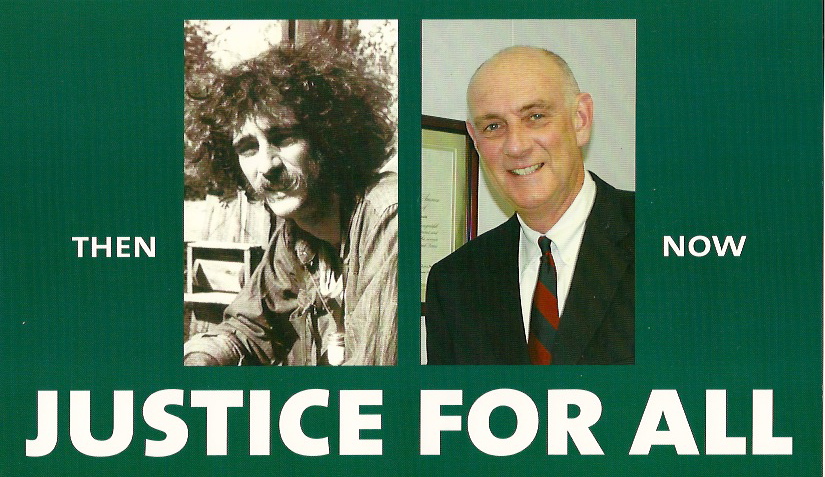 If this was some other place than Berkeley, this would be a hit piece sent out by an opposing candidate.
Childhood Obesity Report-Urban sprawl is bad for our children’s health
Excerpts from the White House Task Force on Childhood Obesity Report to the President, May 2010 on this Bike to Work Day:
How communities are designed and function can promote—or inhibit—physical activity for children and adults. The built environment consists of all man-made structures, including transportation infrastructure, schools, office buildings, housing, and parks. Children’s ability to be physically active in their community depends on whether the community is safe and walkable, with good sidewalks and reasonable distances between destinations.
Research is still emerging on the exact interaction of the built environment and the impact on childhood obesity. Yet, a series of research studies suggests that attributes of our current built environment, such as low density development and sprawl, have had a negative impact on health outcomes, contributing to obesity and related health problems. Several of these studies have found that areas with greater sprawl tend to have higher rates of adult obesity. The combination of greater distances between destinations as development sprawls outward from city centers and the lack of pedestrian and bicycle infrastructure contributes to eliminating walking and biking as options and to increased driving. One-fifth of all automobile trips in urban areas are one mile or less, and over two-fifths of these trips are under three miles, distances easily walked or biked if the proper infrastructure were available Low-income communities in particular often have a higher number of busy through streets, poor cycling and pedestrian infrastructure, and few high-quality parks and playgrounds—all elements which seem to deter physical activity.
On the other hand, communities that emphasize pedestrian-friendly design have the potential to bring about better health outcomes. Such designs help decrease automobile travel, increase opportunities for physical activity, enhance public safety, and improve air quality, while simultaneously preserving agricultural and other environmentally fragile areas. Research suggests that doubling residential density across a metropolitan area might lower household vehicle miles traveled by about 5 to 12%, and perhaps by as much as 25%, if coupled with other measures.
Creating new walkable, bikable communities can be feasible, but retrofitting the vast majority of existing American communities poses a separate challenge. This includes revitalizing older, traditional neighborhoods, often found in center cities or towns, to make them more viable, active communities. It also includes retrofitting newer sprawling communities to diversify their transportation options, creating a more walkable street grid.
Programs like Safe Routes to Schools (SRTS), funded by the U S Department of Transportation (DOT), have proven an effective way to get students safely walking and biking to school. Serving students in grades K-8, the SRTS program supports capital investments, such as building sidewalks, crosswalks, creating better community designs, and providing other supports for active transport. Nearly 6,500 schools are participating in the federal SRTS program, which has provided $612 million for this purpose since 2005. SRTS helped and continues to help increase the number of students walking to school and decrease those being driven to school. A study of SRTS sites in California showed a 38% increase in students walking to school.
Recommendation 5.8: Reauthorize a Surface Transportation Act that enhances livability and physical activity. A complete network of safe bicycle and pedestrian facilities would allow children to take more trips through active transportation and get more physical activity New Federal aid construction projects should accommodate bicyclists and pedestrians by incorporating“Complete Streets”principles As improvement projects for existing facilities are undertaken, transportation infrastructure should be retrofitted, where feasible, to support and encourage bicycle and pedestrian use State and local money can also be leveraged to support safe facilities for children to walk or bike to places like parks, playgrounds, transit, and community centers The reauthorization could adopt Complete Streets principles that would include routine accommodation of walkers and bicyclists for new construction, to influence retrofitting of existing communities, and to support public transportation. In addition, it could enhance authority for recreational areas on public lands.
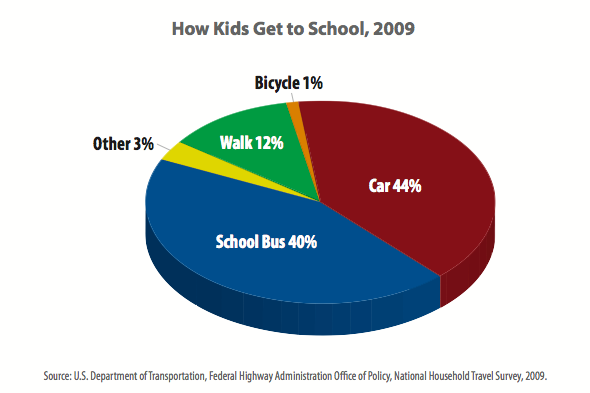 Full report available at http://www.letsmove.gov
Sorry PG&E, why I am voting against Prop 16
The ads have been as slick as the oil now floating off the coast of New Orleans. TV ads show a nice sounding woman standing in a park. A postcard arrives in the mail with pictures of solar panels and sunflowers. They are all financed by Pacific, Gas, and Electric Company, asserting that my right to vote is being defended. What they are proposing is an amendment to the California State Constitution to require 2/3 voter approval before any local government can get into the electricity business. PG&E argues that my local city council or county board of supervisors can decide to start up publicly owned utilities without holding an election, which is true. Unfortunately, the logic that the process is undemocratic is faulty.
If my city, Berkeley, does decide to buy electricity through Community Choice Aggregation, and this city has been considering that plan for awhile, there would be public hearings and plenty of opportunities for the people to make their views heard in the hearing process. If the council does make a decision the public doesn’t like, there are several options for voters to express their displeasure. One way is to vote out the council members that made the decision and replace them with new members who would decide differently. The other, more direct option is to put the issue on the ballot through the initiative or referendum process.
Contentious issues are always being placed on our local ballot. These include amending the master plan allow population growth downtown and providing dedicated lanes for Bus Rapid Transit. It has been easy for opponents to get the required number of signatures to place measures on the ballot. Interestingly, many of these measures have failed to receive a voter majority.
It is not enough that Prop 16 requires a vote. It demands a 2/3 majority to pass. Yet, passing this amendment to the constitution requires only a simple majority. It was another simple majority that amended the constitution to take away the right of same-sex couples to get married. Is that democratic?
The nice sounding woman in the park is right about one thing. This is not about whether community choice aggregation is a good or bad idea. In fact, it may be a very bad idea. But that doesn’t mean we have to load up our ballots, which are already quite long, or tie the hands of our elected representatives. That is why we are called a republic. We chose people to make such decisions for us and fire them if they don’t act in our interest. The initiative is an important tool for providing more checks and balances, but that tool should not be abused. That is why I am voting no on Prop 16.
The San Francisco Chronicle opposes Prop 16. This is their editorial. http://www.sfgate.com/cgi-bin/article.cgi?f=/c/a/2010/04/18/IN2N1D0432.DTL
AZ’s SB1070, a real bad idea
If I was a police officer in Arizona right now, I would be looking for a job in a different state. The new law SB1070 signed by Governor Brewer would make that impossible to do within the bounds of the US Constitution. As much as the proponents of the law may object, SB1070 is about racial profiling.
There is a lot of confusion about what police can and cannot do to identify people suspected of committing crimes. Last year, a Berkeley police officer spoke to our neighborhood group regarding an upswing in violent crime that included a man being murdered in a drive-by shooting. “The first thing I want to tell you,” he said, “ is I profile. I profile every day. But what I am profiling is behavior not race.”
So if I am walking down the sidewalk and at every driveway I wander up and look into the backyard, that would be suspicious behavior. I may not be a criminal. I may be looking for my lost dog. Then again, I might be looking for something to steal. Either way, my behavior is suspicious enough to warrant questioning by the police. My race and/or appearance is irrelevant.
This is the dilemma for the police officers in Arizona. What behaviors are going to tip them off that someone may be in this country illegally? Without a specific behavior to set one person out from another, the only fair response would be to question everyone. What an incredible waste of police time that would be!
Even more frustrating, the Arizona immigration law has diverted our attention from the issue of climate change. The Senate Democrats have decided to hold up their climate change bill to deal with the hot button issue of immigration reform. And that issue is quite hot. On the radio talk shows I have been listening to, immigration and the Arizona law have dominated the discussions. Ironically, if scientific predictions prove correct, climate change will exacerbate immigration, as people try to escape drought-stricken areas to the remaining places where fresh water is available. If we think we have problems now, just wait a few more years while doing nothing about limiting our greenhouse gas emissions.
The real bad news in the healthcare poll
The Republicans have been touting a new poll from Indiana University’s Center for Health Policy and Professionalism Research on the recently enacted Health Care Reform legislation. 58% of those interviewed support repeal of the law. What this means for the mid-term elections is open to debate. The 600 respondents contacted through landline phone are over 80% white, 31% Republican, and 29% registered Democratic. Almost half have insurance paid by their employer or spouse’s employer with another 20% receiving Medicare or Medicaid. It would be interesting to see the numbers of those who have to pay for insurance out of their own pockets.
More interesting, the poll found that 67% believe “Establishment of a public option that would give individuals a choice between government-‐provided health insurance or private health insurance” is important, including 67% of Republicans and 74% of Democrats. So it is not true that a majority of Americans oppose Health Care Reform. Many find the current law too weak.
Unfortunately, the real bad news in this poll has nothing to do with health insurance. Respondents were asked to rate other major issues by importance, such as reducing the federal deficit and regulating the financial system. At the bottom of the list is addressing climate change with only 32% saying the issue is important and 31% saying it is not important at all. Only 19% of Republicans consider it important, and 46% find it unimportant.
This is the bad news for us who waited patiently for Obama to sign the watered-down health care bill so we could turn our attention to the climate crisis that needs immediate attention. Now regulation of the financial industry has been shifted to the front of the line, making us wonder if climate change legislation has any chance of consideration this year. If Democrats lose a significant number of seats in Congress this November we may have lost our chance to have Obama sign a bill into law during his first and possibly only term.
There is no doubt a number of important issues that need our attention, especially after the last eight years of mismanagement in the White House. Our financial markets do need reform to prevent another economic meltdown, similar to the fall of 2008 when we came close to a second major depression. But what about economic destruction on the scale of two world wars and great depression combined? That is the headline in an article by David Doniger on the Energy Collective blog and shows that the Chinese are taking climate change very seriously. Doniger writes, “Today China’s leaders get it – they see the threat climate change poses to their own well-being. And more importantly, they see the opportunity in the clean energy economy of the 21st century.”
Unfortunately, if the CHPPR poll represents the minds of the American voter, the United States does not get it. It is time to put climate change to the front of the line of important issues, even if that means putting other issues that are dear to us further down that line. As a gay American, I want to repeal Don’t Ask Don’t Tell and the Defense of Marriage laws. I want to end discrimination against LGBT people in the workplace. Yet that legislation would mean very little if the worst case scenarios of climate change come to pass. We will not be thinking too much of whom we can marry if we can’t get a clean glass of drinking water.
http://chppr.iupui.edu/research/repealsurvey.html
http://theenergycollective.com/TheEnergyCollective/63262
How an atheist views the afterlife
I was really moved by Terry Gross’ interview with historian Tony Judt on her Fresh Air program on March 29. Judt, who is now living with Lou Gehrig’s Disease, discussed how his disability has affected his work and thinking. I was especially impressed with his comments about death and want to share them here. As I turn 60 years old, I have been giving a lot of thought to the end of life. This is very useful advice for believers and nonbelievers alike.
“I don’t believe in an afterlife. I don’t believe in a single or multiple godhead. I respect people who do, but I don’t believe it myself. But there’s a big ‘but’ which enters in here. I am much more conscious than I ever was — for obvious reasons — on what it will mean to people left behind once I’m dead. It won’t mean anything for me. But it will mean a lot to them. It’s important to them — by which I mean my children or my wife or my very close friends — that some spirit of me is in a positive way present in their lives, in their heads, in their imaginations and so on. So [in] one curious way I’ve come to believe in the afterlife — as a place where I still have moral responsibilities, just as I do in this life — except that I can only exercise them before I get there. Once I get there, it will be too late. So, no God. No organized religion. But a developing sense that there’s something bigger than the world we live in, including after we die, and we have responsibilities in that world.”
More available at
http://www.npr.org/templates/story/story.php?storyId=125231223
-
Archives
- July 2024 (1)
- May 2023 (1)
- May 2022 (1)
- September 2021 (1)
- March 2021 (1)
- October 2020 (2)
- September 2020 (1)
- May 2020 (1)
- April 2020 (1)
- March 2020 (2)
- January 2020 (1)
- December 2019 (1)
-
Categories
-
RSS
Entries RSS
Comments RSS
 Tomyamaguchi's Weblog